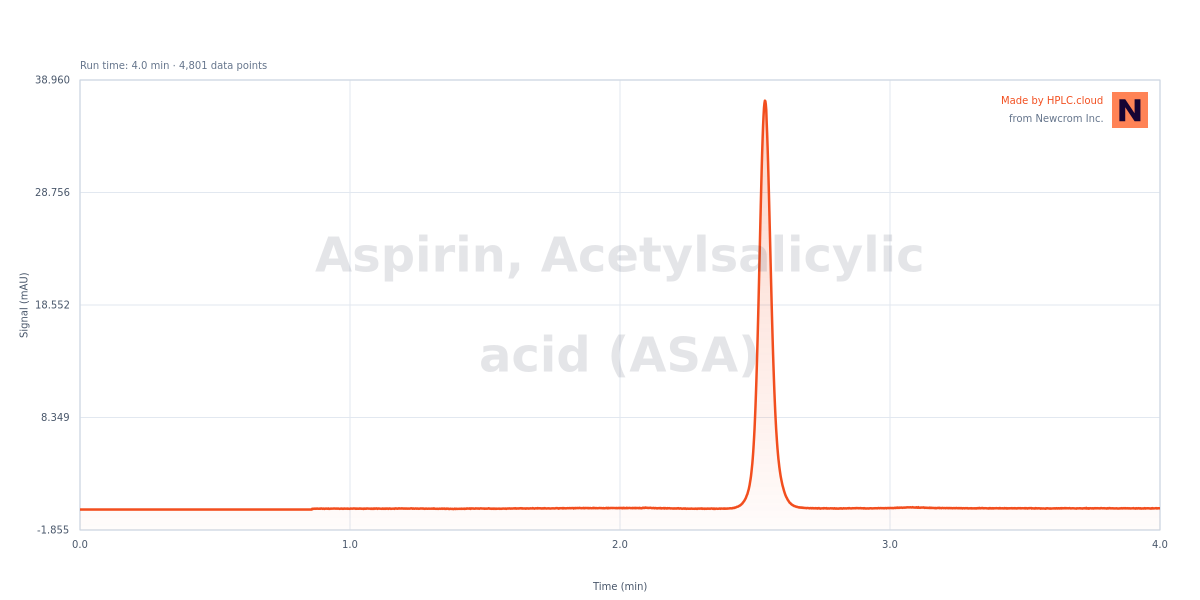
HPLC Method for Analysis of Aspirin, Acetylsalicylic acid (ASA) on Alltesta™ Gradient
Acetylsalicylic acid (ASA), also known as Aspirin, is an organic compound with the molecular formula C9H8O4. It is a nonsteroidal anti-inflammatory drug (NSAID) that is used to reduce fever, pain, and inflammation. It is also used to treat Kawasaki disease, pericarditis, and rheumatic fever. Aspirin is a genetic medication that is widely available and can be procured without a prescription. It is one of the oldest NSAIDs in the world. Acetylsalicylic Acid (Aspirin) can be retained and analyzed using the Primesep 100 stationary phase column. The analysis utilizes an isocratic method with a simple mobile phase consisting of water and acetonitrile (MeCN) with phosphoric acid as a buffer. Detection is performed using UV.
Frequently Asked Questions: HPLC Method for Analysis of Aspirin, Acetylsalicylic acid (ASA) on Alltesta™ Gradient
What analyte does the HPLC Method for Analysis of Aspirin, Acetylsalicylic acid (ASA) on Alltesta™ Gradient cover?
The HPLC Method for Analysis of Aspirin, Acetylsalicylic acid (ASA) on Alltesta™ Gradient is designed for Aspirin, Acetylsalicylic acid (ASA), a drug compound. Acetylsalicylic acid (ASA), also known as Aspirin, is an organic compound with the molecular formula C9H8O4.
Which column and mobile phase are required for Aspirin, Acetylsalicylic acid (ASA) analysis?
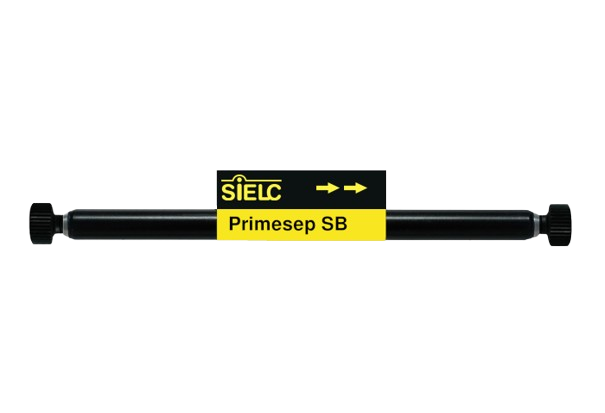
Run the separation on Primesep 100 (4.6 x 150 mm, 5 um, 100 A, dual ended), SKU 100-46.150.0510. Typical mobile phase: MeCN, 50% 50% H2SO4, 0.2%; H2O 50%.
What instrument conditions should I use for the HPLC Method for Analysis of Aspirin, Acetylsalicylic acid (ASA) on Alltesta™ Gradient?
Operate on Alltesta™ Gradient with 275 nm. Flow rate: 1. Injection volume: 1. Run time: 4.